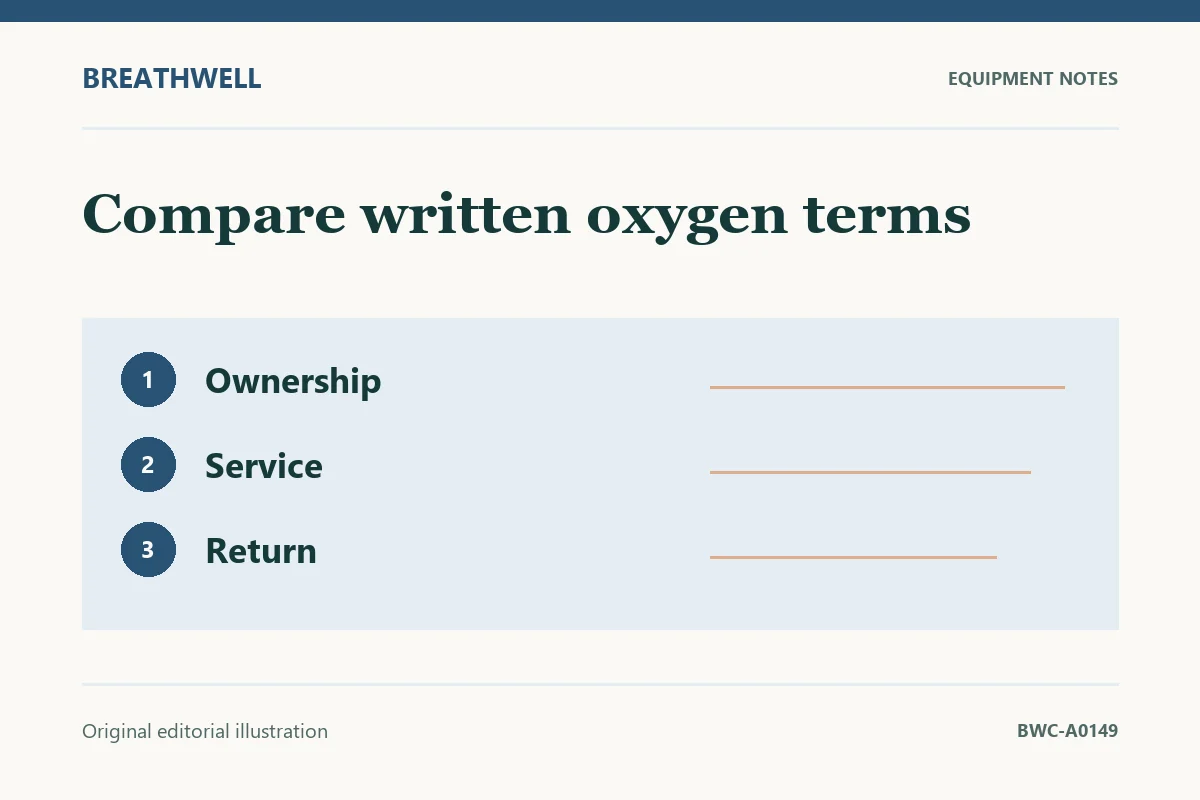
A rental offer says service is included. A purchase offer says a manufacturer warranty is included. Before comparing the offers, ask each supplier what its wording covers. Who owns the equipment? Who supplies routine items? Who handles a service request while the equipment is unavailable? Those answers need their own lines.
Read the warranty alongside the offer
For an example of what a warranty actually addresses, see section 14 of the U.S. Inogen Rove 6 manual, revision 96-13622-00-01 A. It describes a limited warranty for defects in materials and workmanship, refers to the customer invoice, and treats listed accessories separately from the concentrator. That section is not a particular supplier’s agreement to provide routine supplies or temporary equipment. Ask for the warranty tied to the written offer and have the supplier identify any separate service terms.
Compare one responsibility at a time
Use one copy of this worksheet per offer. For each line, write the responsible party, the document and clause, and any separate charge or unanswered question. Keep the date and exact model on both copies.
- Ownership: Owner at delivery ___; ownership or return at the end of the agreement ___; clause ___.
- Routine supplies: Item named in the offer ___; who supplies it and whether it is included ___; clause ___.
- Defect claim: Who handles the claim ___; accessories covered separately ___; document ___.
- Equipment unavailable: Who coordinates service ___; any temporary equipment terms ___; clause ___.
Fictional example: a supply charge is still unanswered
The rental agreement names the supplier as owner and lists routine cannulas in a separate schedule. The purchase quote names the buyer as owner and attaches a device warranty, but names no supply arrangement. Record schedule attached for the rental and routine supplies not stated for the purchase. Ask the seller to put the supply terms in writing; do not fill the gap from the warranty.
Source note: The warranty example is limited to the named U.S. manual. The worksheet compares written responsibilities; it does not rank offers, decide coverage or establish which equipment meets a prescription.