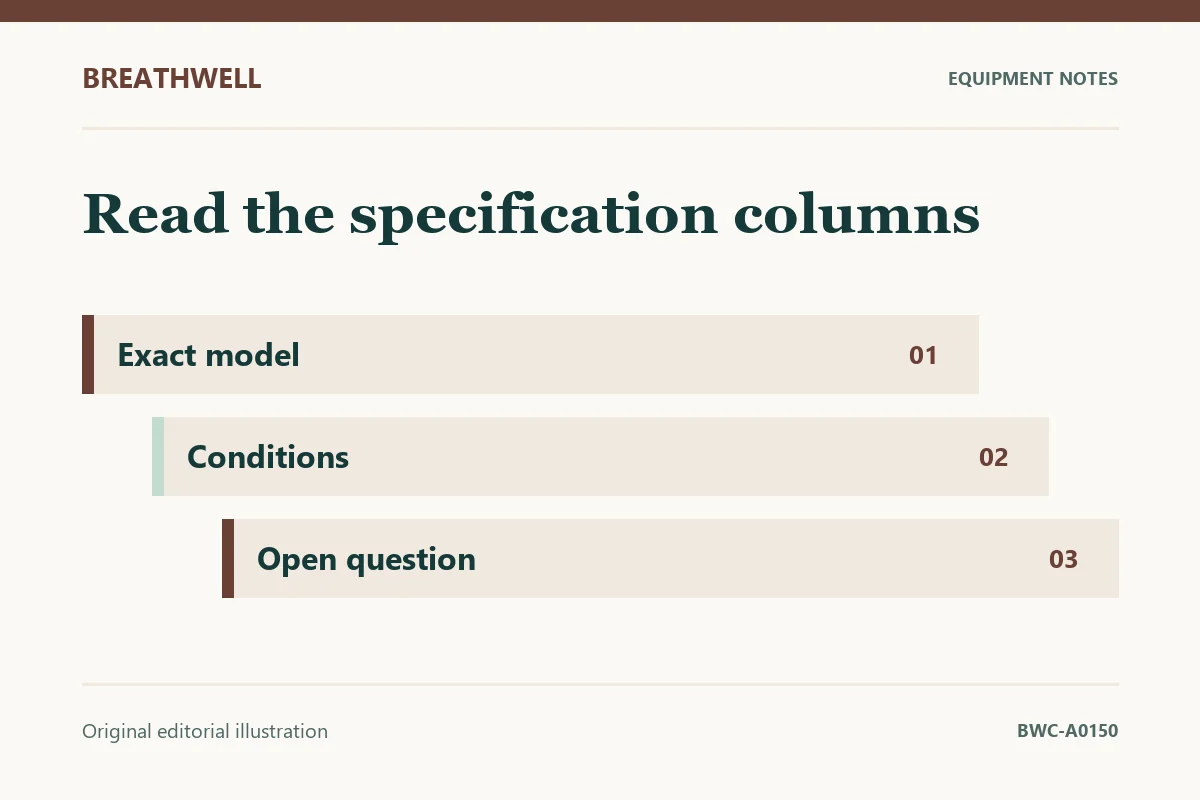
A supplier’s one-page sheet says temperature range but does not say whether it means storage or operation. Before passing that line to your care team, ask which manufacturer row it came from. A number copied correctly under the wrong heading still answers the wrong question.
Match the sheet to the device and manual
This example uses an illustrative supplier sheet for the Inogen Rove 6 concentrator IO-501. Inogen’s U.S. manual index lists English revision 96-13622-00-01 A, and the manual’s back page prints December 2024 and that revision. Record the model on the quote or label and the printed document code before checking any line.
Worksheet: restore the missing heading
For each line, record the supplier’s wording, the exact manual heading and page, and who needs to clarify it. Leave lines marked unverified when they cannot be matched.
| Oxygen output | Section 12.1, p. 31, lists oxygen concentration separately from the delivery-mode field. Ask what the abbreviated label refers to; send any prescription question to the care team. |
|---|---|
| Power | Section 12.1, p. 31, has separate AC, DC and battery entries. Ask which entry the sheet used and what equipment the supplier actually quoted. |
| Environment | Section 12.1, pp. 31-32, separates operating conditions from shipping and storage. Ask for the original heading and its notes. |
| Alarms | Section 7.1, p. 19, distinguishes status indicators and alarms. Ask which documented indicator an abbreviated alarm entry describes. |
Fictional example: ask for the corrected row
The supplier replies that temperature range came from the storage entry. Mark the operating entry missing from sheet and ask for a corrected copy that labels each range. Bring that copy and the manual reference to the review. The earlier line tells the team nothing about the proposed place of use.
Source note: This crosswalk is limited to the named U.S. manual. It helps verify labels and missing conditions; it does not recommend equipment, interpret an active alarm or assess a room.