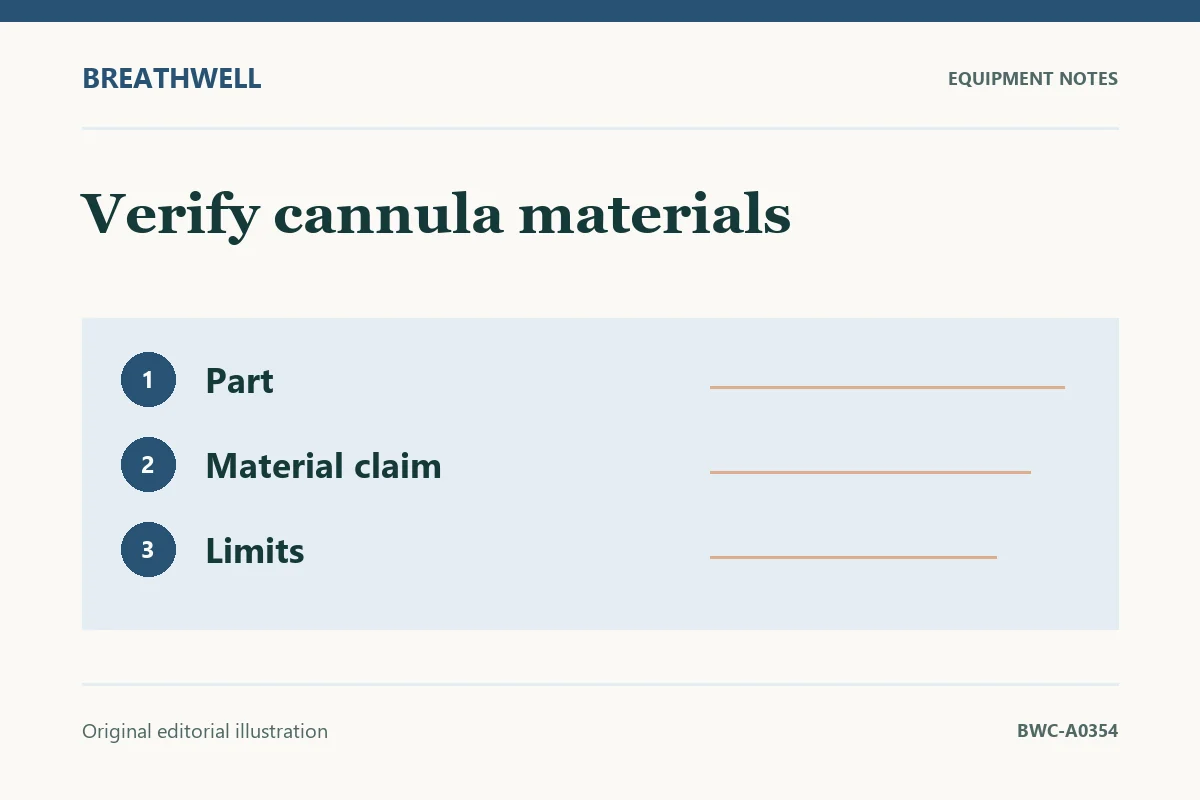
A latex statement for a named oxygen cannula does not automatically cover a separately supplied extension or the packaging. The useful question for the supplier is which exact item the statement describes. Not yet medically reviewed.
Keep the catalog line and the package separate
The Medline EMS catalog, Oxygen Equipment and Delivery, p. 30, Cannulas, identifies the illustrated adult standard-connector item as HCS4511B and gives a natural-rubber-latex manufacturing statement in the Cannulas section. The same table has a separate HCSU4511B row. This catalog example does not establish the content of a current package or authenticate a label that shows only part of the code.
FDA’s December 2014 U.S. labeling guidance, section 4, distinguishes a claim about materials used to manufacture a product or a specific component from an assurance that allergens are absent. It treats product, container and packaging as scopes that may differ.
Record which item the statement actually covers
- Cannula
- Full current package reference ___; manufacturer statement, document date and scope ___.
- Separate extension or other supplied component
- Separate reference ___; statement for that item ___.
- Packaging
- Does the written statement explicitly address the container or wrapper? ___.
Fictional example: A supplier forwards a screenshot showing “4511B” without the prefix and says the extension is included. Record the cannula reference as incomplete and leave the extension and wrapper lines open. Ask for the current manufacturer statement tied to each item before treating any of those lines as verified. A known allergy or a suspected reaction is a question for the care team, not a conclusion to draw from the catalog wording.
Source note: The catalog and FDA guidance explain labeling evidence. They do not establish the formulation of an unverified item or individual tolerance.