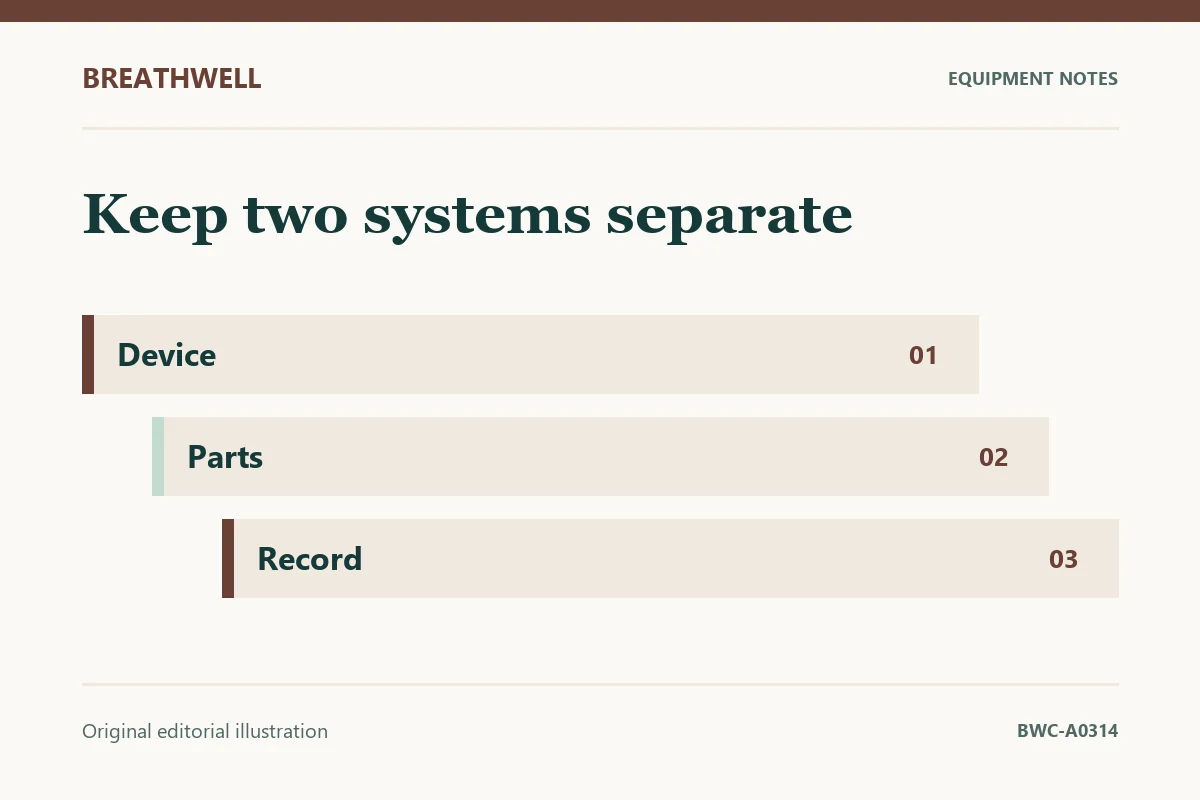
When two prescribed inhaler systems live in the same home, give each its own label on the equipment record and on the spot where you keep its paperwork. If their supplies can be stored separately under their existing instructions, use the same two labels on the shelf or the outside of each organizer. Leave original carton and pharmacy labels readable. The FDA home-device checklist advises keeping instructions close to the equipment and taking notes when asking the doctor or supplier questions. The two-label layout below is an editorial organizer, not a storage specification.
Give the shelves and paperwork the same names
| Home label | Names copied from the original labels | Where the matching paperwork lives |
|---|---|---|
| System A | Full inhaler name and strength; confirmed accessory name and reference, if any | Folder or location; exact documents and pharmacy contact |
| System B | Full inhaler name and strength; confirmed accessory name and reference, if any | Folder or location; exact documents and pharmacy contact |
Pick short, clearly different names for the two locations and write the full names on the card. If you use colored stickers, add words as well. The purpose is to be able to answer “Which label and leaflet go with this?” without relying on color. Keep the equipment in its existing labeled packaging as applicable; the organizer does not replace any package or instruction.
Leave a separate line for a loose, unidentified item
For example, if a cap turns up with no packaging, write “loose cap, identity not confirmed” on a separate question line. Do not list it under either system based on its color or by trying it. Ask the pharmacist or supplier to identify it. The card records confirmed identities; it does not decide which equipment is prescribed, what goes together or whether a piece is ready to use.
Scope: Household labeling and paperwork only. Not yet medically reviewed.