When a supplier exchanges a respiratory device for another of the same model, keep the old and new units separate on paper. A single row labeled “the vest” makes it hard to tell which machine was returned, which one is at home and which support case applies.
FDA’s UDI Basics distinguishes a device identifier, which identifies the labeler and model or version, from production information, which may include a serial or lot number. Use the identifiers actually printed on your label or delivery record. As a practical example, Baxter’s Model 105 training booklet has separate model and serial fields, and its U.S. literature catalog identifies the Vest 105 user manual as item 145330. That is a literature reference, not the serial number of either machine. Copy the manual revision separately when confirmed for the incoming unit.
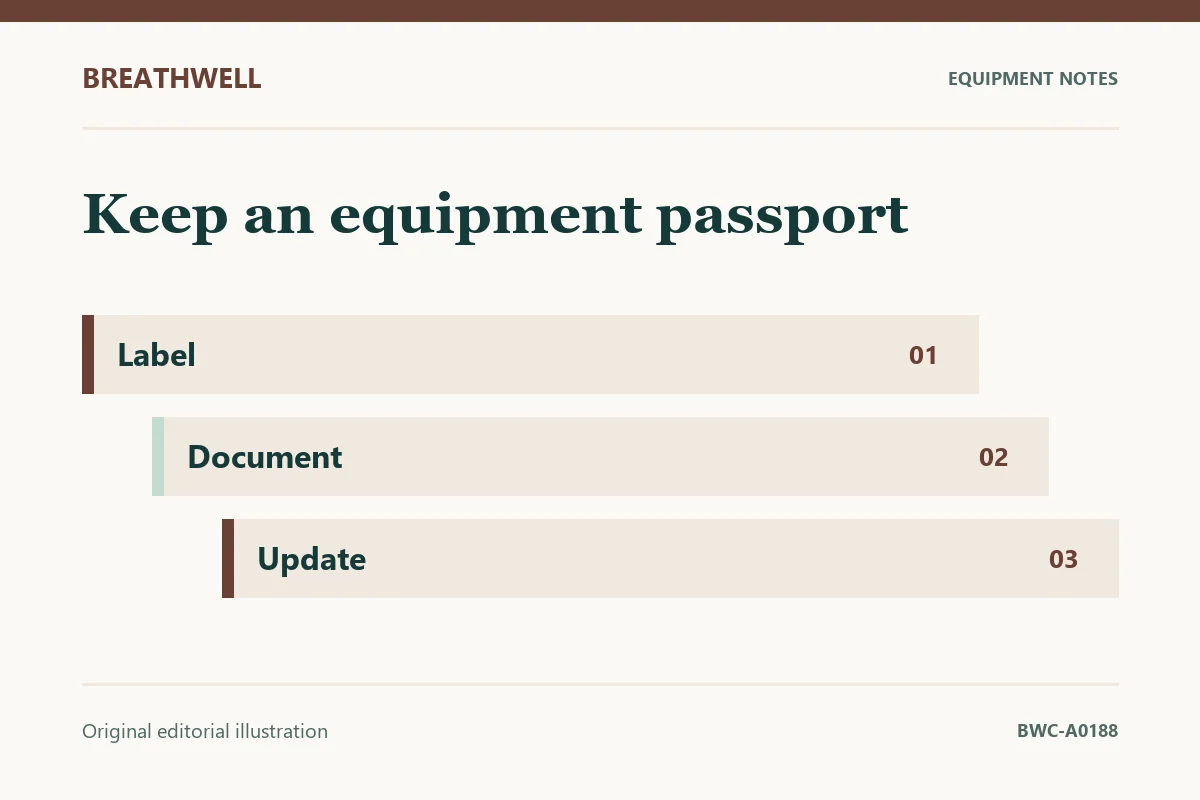
Copy this two-row passport
| Unit | Label, manual and parts record | Supplier and exchange reference |
|---|---|---|
| Outgoing | Model/serial: ___; manual/revision: ___; separately listed parts returned: ___ | Contact: ___; return confirmation/date: ___ |
| Incoming | Model/serial: ___; manual/revision: ___; separately listed parts received: ___ | Contact: ___; delivery confirmation/date: ___ |
Fictional exchange: Both units are labeled Model 105, but their serials differ. The supplier confirmed pickup of the old unit. The incoming row records the new serial privately and says “manual item 145330; revision confirmation pending.” The delivery slip lists a garment separately, so it gets its own line under the incoming unit, not an assumption that everything from the outgoing record transfers.
Try a callback from the passport: point to the current serial, the exact manual question and the exchange reference without using the old row. Keep any pending return confirmation beside the outgoing serial. If any answer still depends on the previous unit’s paperwork, mark it unresolved and ask the supplier to reconcile it.
Review status: Not yet medically reviewed.