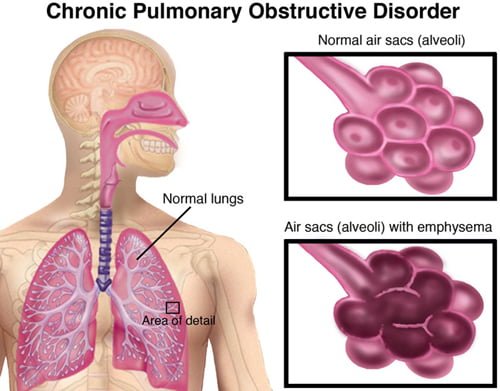
COPD can affect movement and ordinary tasks through breathlessness, cough, chest tightness and fatigue. The effect varies. NHLBI lists common symptoms but notes that not everyone has all of them. Its COPD overview explains how damage to airways or other lung structures can obstruct airflow. A symptom list is not a forecast of what you personally will experience.
Use daily tasks to explain the limitation
NHLBI describes breathlessness with activity and extreme tiredness. Tell the team what changed in practical terms. Needing a pause while dressing, stopping on a familiar route or struggling with a meal are examples of useful descriptions, not a test of COPD stage.
The source also describes loss of appetite, weight and muscle among possible effects of more severe COPD. Report unintentional changes instead of assuming they are inevitable or choosing a supplement from an article. The cause and appropriate response need assessment.
Describe the task, the difficulty and whether it is usual or new. That gives the clinician more to work with than a general statement that your body is getting weaker. This page cannot decide that COPD explains every new physical symptom.
Function can be supported in several ways
NHLBI discusses accessible household arrangements, nutrition and appropriate activity. The practical issue may be where things are kept, whether meals are manageable or which activity is safe to discuss. These are different questions, not one treatment for every limitation.
For adults with stable COPD, ATS supports rehabilitation benefits in exercise capacity, breathlessness and quality of life. That can be meaningful without proving that damaged tissue has been restored. Ask which goal a proposed referral is intended to address and how progress would be measured.
This article supplies no workout, energy target or nutritional prescription. Bring the most important physical limitation to the team and ask which kind of support fits it.
Do not fold sudden worsening into the usual routine
NHLBI advises prompt contact for symptoms that suddenly worsen. Severe difficulty breathing or talking, blue or gray lips or nails, or reduced alertness can need emergency care; call 911 in the United States.
An everyday limitation deserves help, but an acute change needs a different response. Ask the team to explain both tracks in your own plan so that chronic symptoms do not become a reason to overlook something new.
Sources and scope
These sources explain general COPD effects and care options. They do not assess your symptoms, stage or prognosis. Not yet medically reviewed.
Related posts:
 How Does Nutrition Affect COPD, And Are There Dietary Recommendations For Managing It?
 How Does Stress Affect Asthma, And What Stress-reduction Techniques Can Help Manage It?
How Does Stress Affect My Respiratory Condition?
How Does COPD Make You Feel?
What Lifestyle Choices Affect Asthma?
What Role Does Oxygen Therapy Play In COPD Management, And Who Needs It?