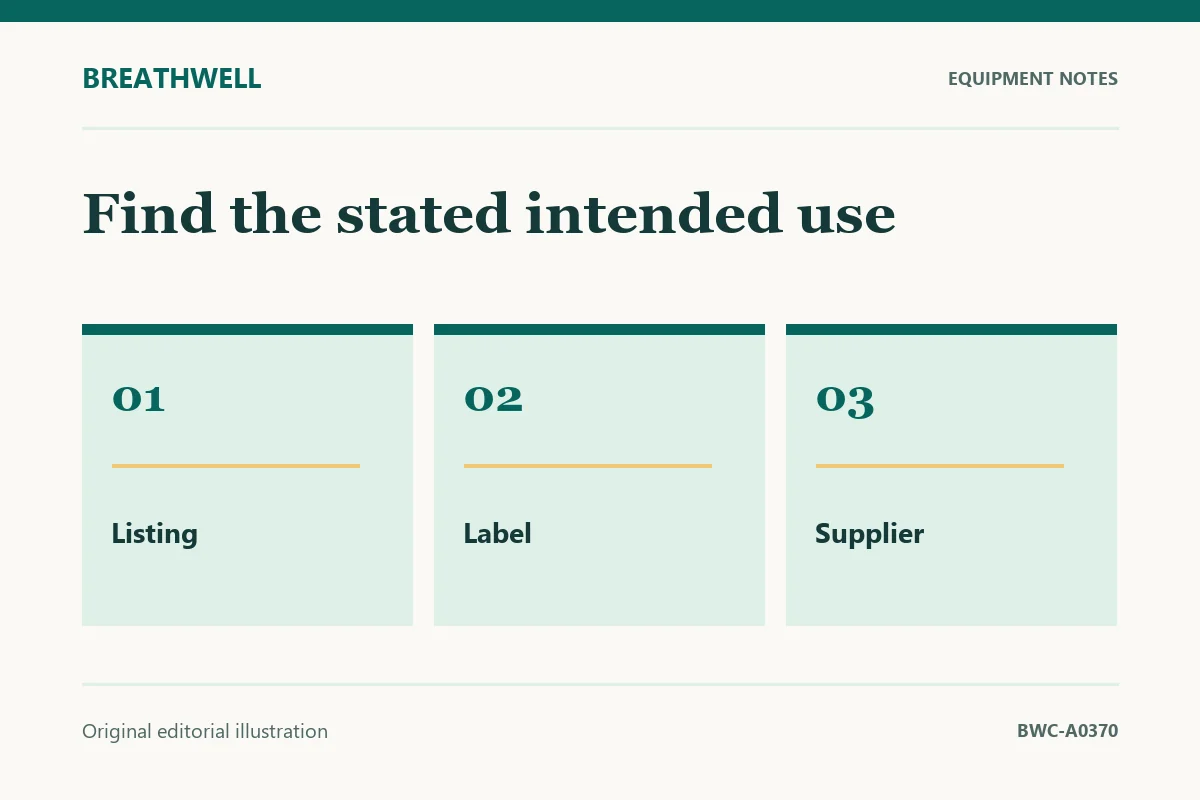
A listing that says “breathing aid” or “airway support” does not tell you what the exact device is intended to do. The useful next step is to ask for the labeling for the item the seller will actually ship. If the seller supplies only a category description or an insert for a different item, leave the intended use unresolved rather than guessing from the photos.
The FDA’s U.S. device-labeling overview treats the firm’s identity and intended use as separate topics. If the package has a unique device identifier, the FDA’s guide to device identifiers explains that the fixed device-identifier portion points to the labeler and a specific version or model. That can help match the paperwork; it does not answer what the device is for or whether it is appropriate for you.
Record the missing answer before comparing offers
| Record | What belongs there |
|---|---|
| Seller’s wording | Copy the exact phrase and note the date. Keep a store category separate from an explicit intended-use statement. |
| Item offered | Record the model and who is named on the label. If the seller cannot identify the unit that will ship, mark the match unresolved. |
| Labeling for that item | Record the document title and the location of its purpose statement. If it describes a different model or the intended purpose is still unclear, record what’s missing. |
Fictional example: A seller supplies a photo of a carton with a model number, then sends an insert that lists a different number. The carton helps identify the offer, but the insert does not resolve its purpose. A useful reply is: “Can you send the labeling for the model shown on this carton and confirm that it is the item you would ship?”
Once the documents match, bring the stated purpose and any uncertainty to the clinician who would advise on the purchase. A documented purpose is not a recommendation to buy. This is a U.S. labeling worksheet, not a product or seller assessment. No equipment was tested. Not yet medically reviewed.