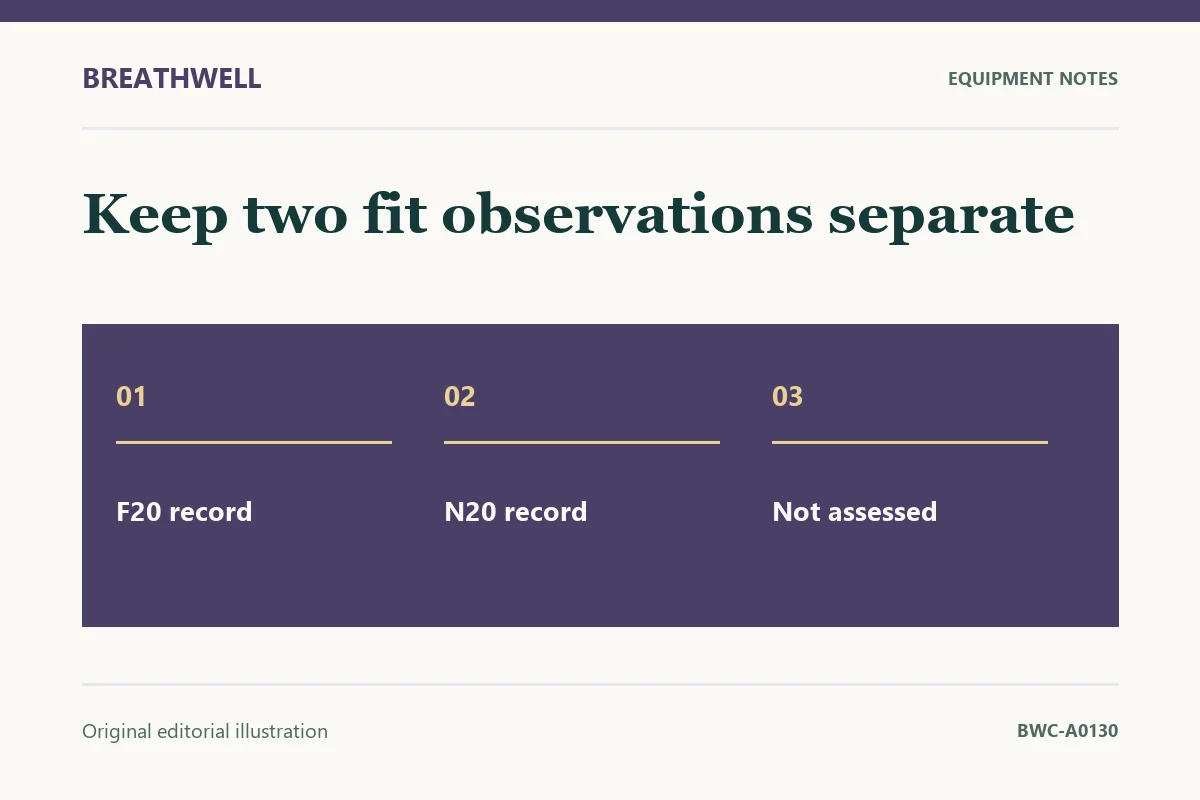
Ask the supplier to record the AirFit F20 and AirFit N20 on separate lines if your care team wants both assessed. The ResMed F20 guide depicts a full-face mask and the ResMed N20 guide depicts a nasal mask. An observation about one cushion or elbow is not an observation about the other mask or even another variant with a similar name.
Clear the magnetic-clip question before the visit activity
The FDA safety communication and ResMed’s current US information for mask users list affected AirFit F20 and N20 magnetic masks. The listed contraindications can apply to certain implants or devices and to listed metallic objects containing ferromagnetic material. Check the current labeling for the wearer and anyone in close physical contact while the mask is in use. The separate distance warning does not override a contraindication. Ask the supplier and clinician to review the exact mask and affected device documentation before a demonstration if a question is unresolved. Do not assume that finding a different cushion changes the status of the clips.
Use one row per configuration and make gaps visible
| Observation | Exact F20 configuration | Exact N20 configuration |
|---|---|---|
| Variant, cushion marking, elbow and guide revision | ___ | ___ |
| Exact labeling checked by whom, and what remains unresolved or not assessed | ___ | ___ |
| Which contact area was actually observed? Describe one concern and when it was noticed. | ___ | ___ |
| What task did the supplier observe, including any assistance with removal or handling? | ___ | ___ |
| Unanswered question and next contact | ___ | ___ |
Fictional note: “N20 handling observed; F20 was not assessed because the clip question was unresolved.” That isn’t a score or a finding about the F20 fit. Keep the provider’s decision separate from your worksheet, and do not adjust therapy or choose an alternative based on the number of completed fields.
Review status: Not yet medically reviewed.