Do not wait for a fingertip reading if a carbon monoxide alarm sounds. Get outside to fresh air immediately and call 911 in the U.S. from outside. The U.S. Consumer Product Safety Commission’s carbon monoxide guidance says not to go back in until emergency responders give permission. It also advises getting outside immediately and seeking medical help if you think you have symptoms from carbon monoxide exposure.
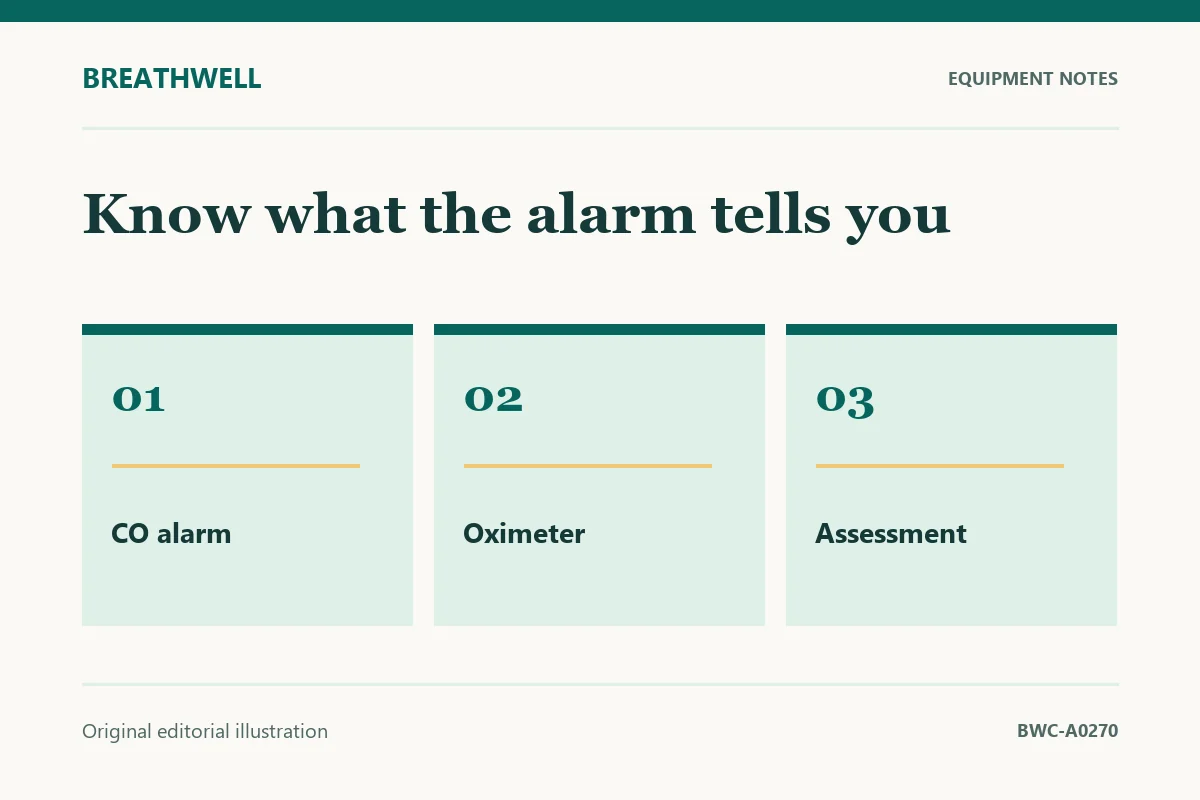
Three names, three different jobs
- Carbon monoxide alarm
- A home CO alarm warns of a possible hazard in the air. The CPSC fact sheet treats a sounding alarm as a reason to leave, not as a prompt to check your blood oxygen first.
- Conventional pulse oximeter
- Its oxygen-saturation estimate cannot rule out carbon monoxide poisoning. The CDC’s clinical guidance says conventional two-wavelength pulse oximetry is inaccurate when carboxyhemoglobin is present. A reassuring-looking display is not an all-clear.
- Clinical CO assessment
- The CDC’s diagnosis and confirmation sections describe measuring carboxyhemoglobin and considering the exposure history. They also distinguish a specialized pulse CO-oximeter from conventional pulse oximetry. That distinction is not a reason to buy a different gadget or try to confirm exposure yourself.
In short: a device for estimating oxygen saturation does not replace the alarm or the people responding to a possible exposure. Report the alarm or suspected exposure when seeking help; do not use a screen reading to decide whether it was real.
Sources and review: U.S. CPSC public safety guidance and CDC clinical guidance are used to distinguish the equipment roles. No home diagnostic steps are provided. Not yet medically reviewed.