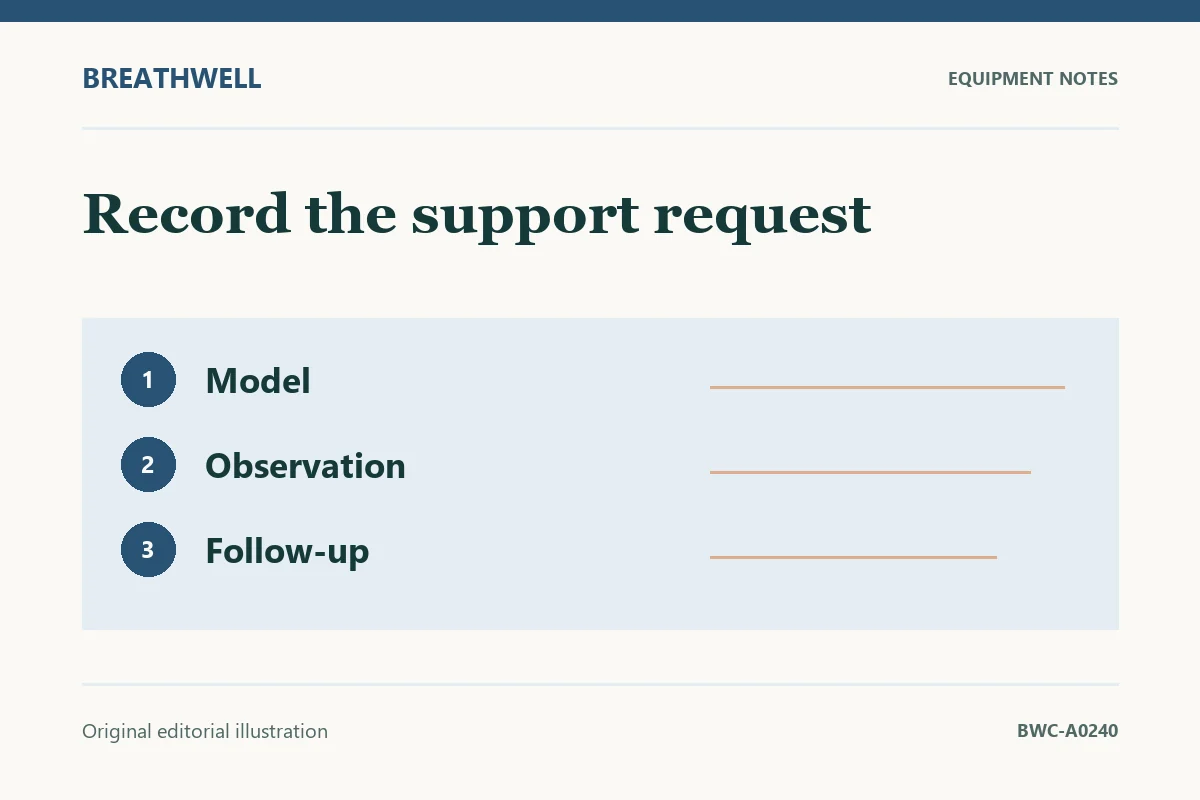
When two people call about the same nebulizer, start the callback with the case reference, then separate what happened from when someone reported it. “It happened twice” is only useful if you know the notes refer to two events. Keep an uncertain match open instead of counting it as a second failure.
Read the date and operator fields separately
FDA’s consumer MedWatch Form 3500B (09/2025) separates the date the problem occurred and the event description in section A from device identifiers and the operator question in section D. Use that distinction to read a fictional supplier note: “Tuesday callback: Alex says the compressor went quiet Monday; Jo gave the serial number Tuesday.” Monday is the reported event date, Tuesday is the callback, and the note does not say who was operating the device. Don’t fill that last field with the name of the person who read the serial number. If a second note just says “went quiet” and has no event time, put it in a separate report row marked “may refer to Monday; no second event confirmed.”
Print one copy per open case
Case reference and supplier: _____ Exact model and serial as printed: _____ Cup or kit reference at the time, if known: _____
| Date and time, or unknown | Event, report or callback? | What was seen or heard, and by whom? | What remains unconfirmed? |
|---|---|---|---|
| _____ | _____ | _____ | _____ |
| _____ | _____ | _____ | _____ |
| _____ | _____ | _____ | _____ |
Answer on the latest callback: _____ Who will follow up, and when? _____
On the call, ask whether the new note belongs with the old case. Read back which event the supplier recorded and which detail is still unknown. Use the sheet for notes you already have; don’t recreate the problem to fill a row. The linked FDA form informed the field distinctions, but this is a supplier worksheet, not a regulatory submission or a decision about repair or replacement.
Review status: Not yet medically reviewed.