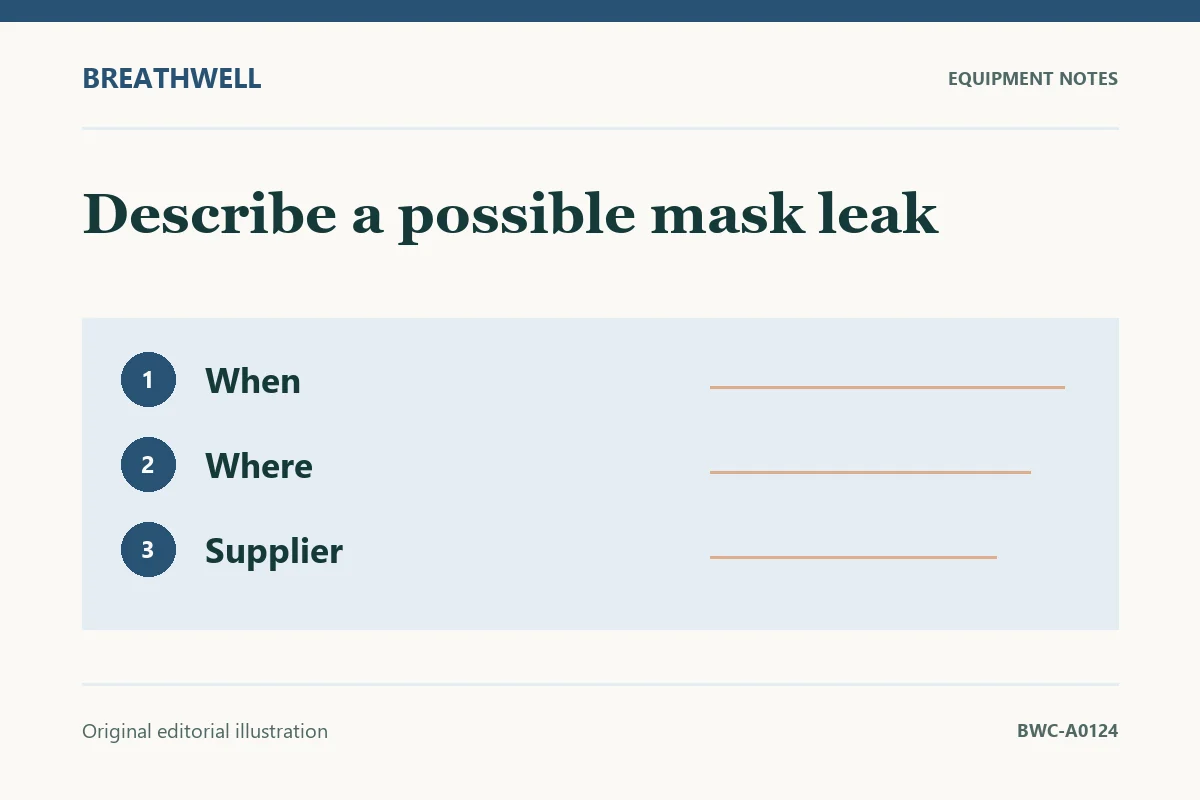
If you notice air or a new sound near your CPAP mask, describe where you noticed it before calling it a leak. The location may be useful to a fitter even if you cannot tell where the air came from. You do not need to recreate the problem to make a useful note.
Mark the observation, not the cause
There is a difference between where you feel air and where the mask is designed to vent it. The Americas AirFit P10 user guide, 628178/2, English pages 1 and 3 and the rear component key, identifies the vent on the frame and describes airflow there during operation. It also says the vent must remain clear. That is an example for the documented P10, not a way to identify the source of an air stream on another mask or to rule out a problem. Do not cover a vent to see whether a sound changes.
- Where did you notice it?
- Use an ordinary landmark, such as beside the left nostril, below the mask or near the hose connection. State whether you heard a sound, felt air, or both. If the location was not clear, write that.
- What was happening?
- Note whether you were settling in, changing position or waking up when it happened. If a fitter previously demonstrated a check for this exact model and you already tried it, record what was done and what you noticed afterward. Leave the field blank if none was attempted.
- What needs to be demonstrated?
- Give the supplier the full mask name and any known cushion or pillow size. Ask them to point out the designed vent on the actual mask, look at the area you marked and show which checks in that model’s guide, if any, belong at home.
Example: “I heard a flutter and felt air near my left nostril after turning. I could not tell where it came from. Can you show me which part normally vents and look at the area I marked?”
NHLBI’s guidance on using PAP lists poor fit and air leaks as reasons to contact the healthcare provider. Bring the note to the care team if the problem persists or raises a treatment question. It is not a pressure, diagnosis or therapy decision.
Review status: Not yet medically reviewed.